
Dester Himmerman
American large-format photographer documenting the abandoned Mars experiment and its stranded survivors in the desert.
American large-format photographer Dester Himmerman has spent the last two years living among the remaining participants of a failed Mars survival experiment in one of the world’s most unforgiving deserts. What began as a scientific simulation designed to test the limits of human endurance has devolved into an unsanctioned and deeply personal struggle for survival. Himmerman’s photographs form a stark and compassionate record of those who chose to remain after the funding vanished and the mission was abandoned.
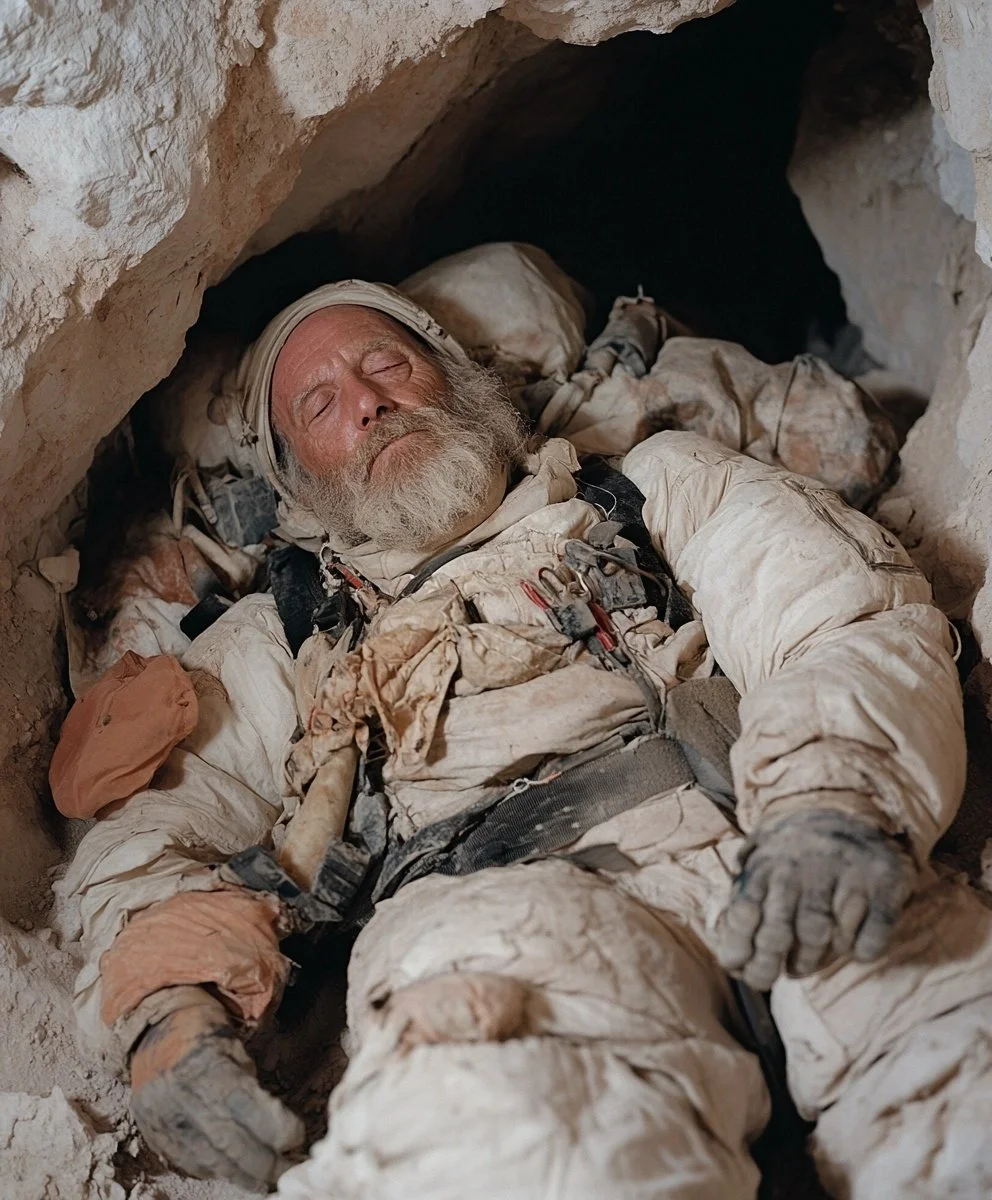
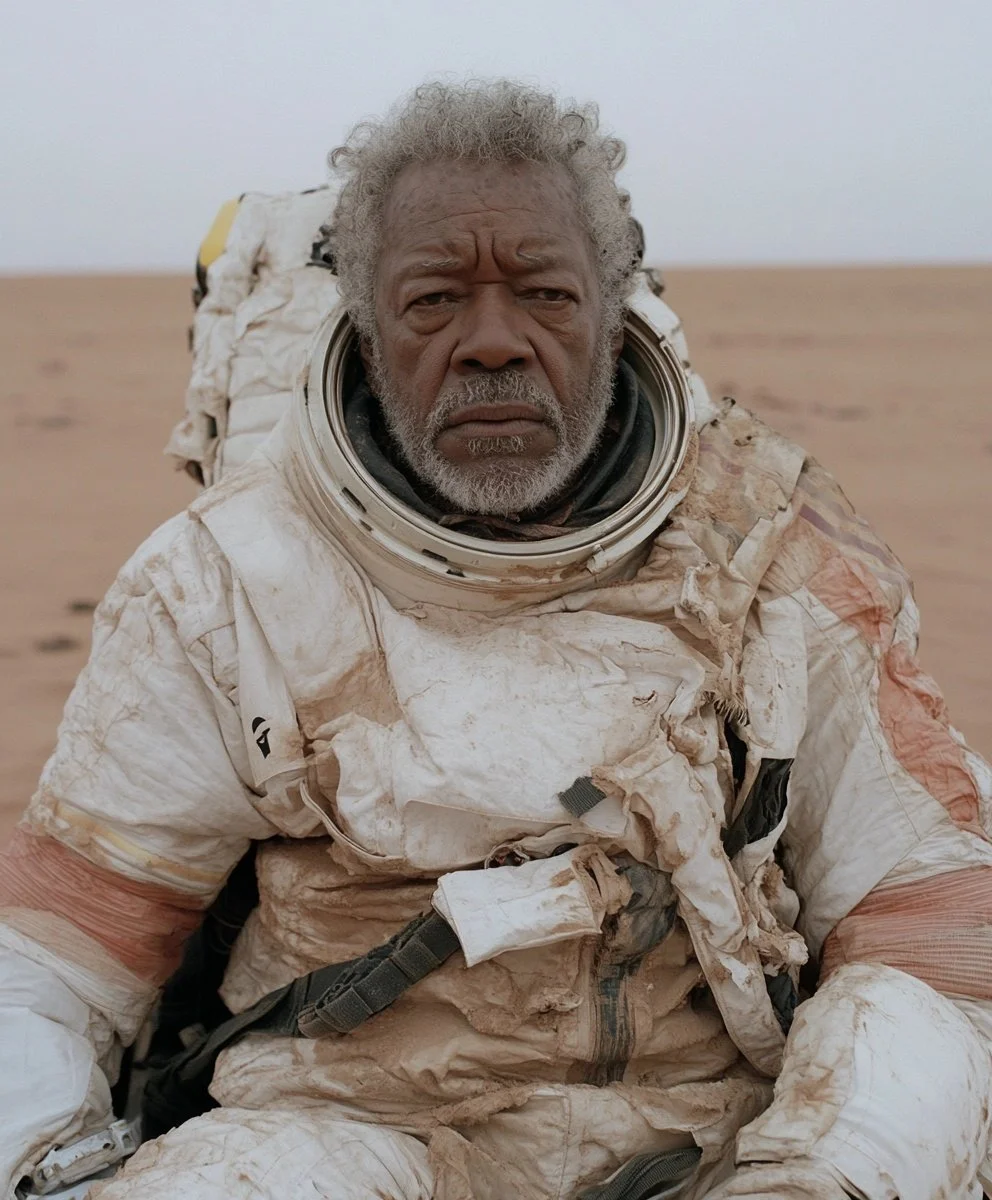
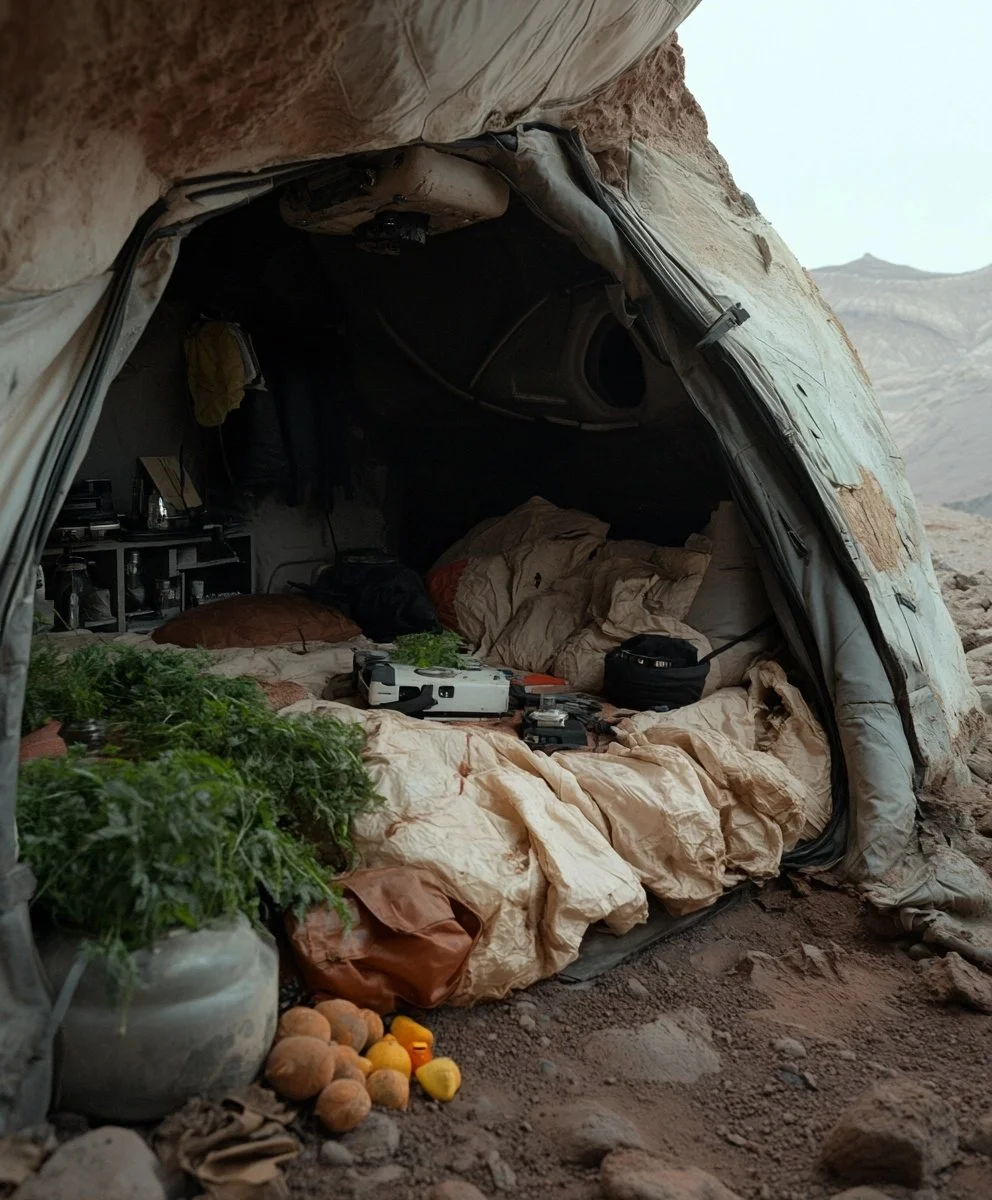
Working with an 8x10 field camera, Himmerman documents collapsed tents, decaying spacesuits, improvised gardens, and the weathered faces of men and women who appear unable, or unwilling, to return to ordinary life. The images possess the quiet gravity of archaeological evidence. Each frame suggests that the dream of reaching Mars has been replaced by something more intimate and tragic: the human need to continue, even when the original purpose has disappeared.
Why did you decide to stay with them for so long?
“I realized very quickly that this was not a story about space,” Himmerman says. “It was a story about people who had invested so much of themselves in an idea that leaving felt like a form of death. I couldn’t photograph that from a hotel room.”
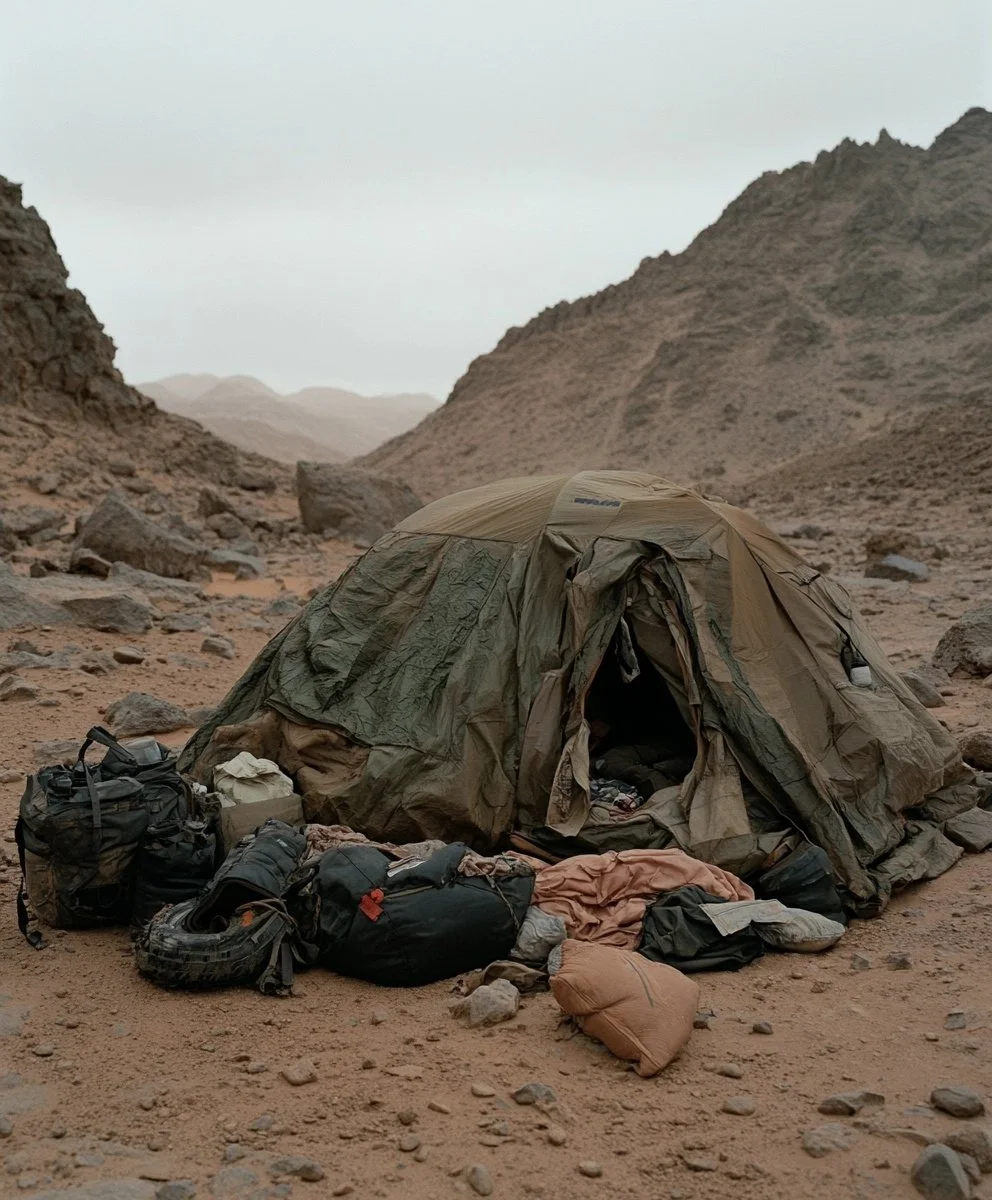
Rather than observing from a distance, Himmerman chose to live in the same harsh conditions as his subjects, sharing their rationed water, battered shelters, and long stretches of silence. This proximity gives the work an unusual tenderness. The photographs never sensationalize the situation. Instead, they reveal a community suspended between belief and exhaustion, still carrying out rituals of maintenance and record-keeping long after the experiment itself has ceased to exist.
What is the project ultimately about?
“I think it asks a very human question,” Himmerman says. “What happens when the mission ends, but your belief in it does not?”
What do you feel when you photograph them?
“Mostly sadness,” he explains. “Not because they failed, but because they are still loyal to something that no longer exists. Their commitment is extraordinary and heartbreaking.”
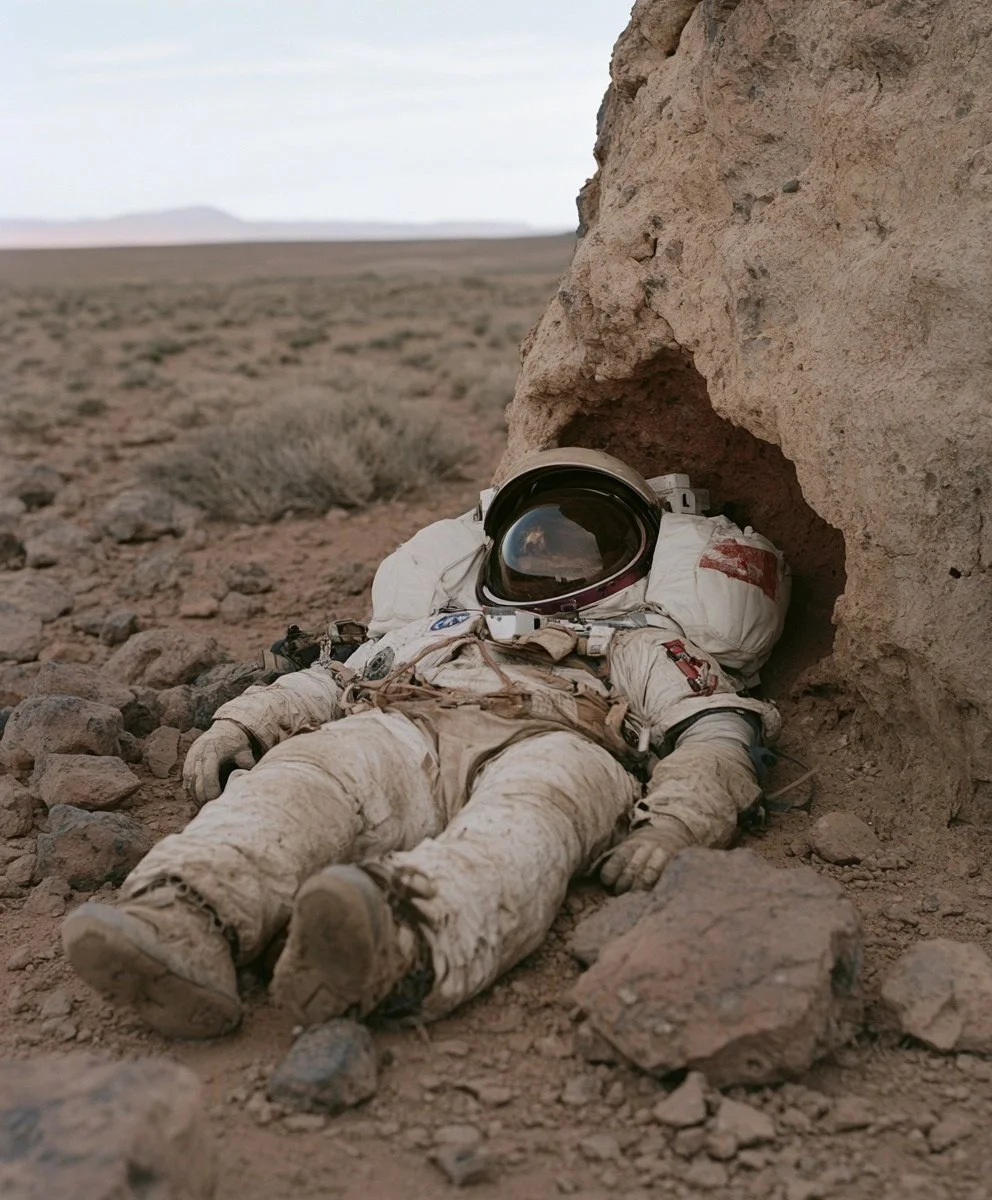
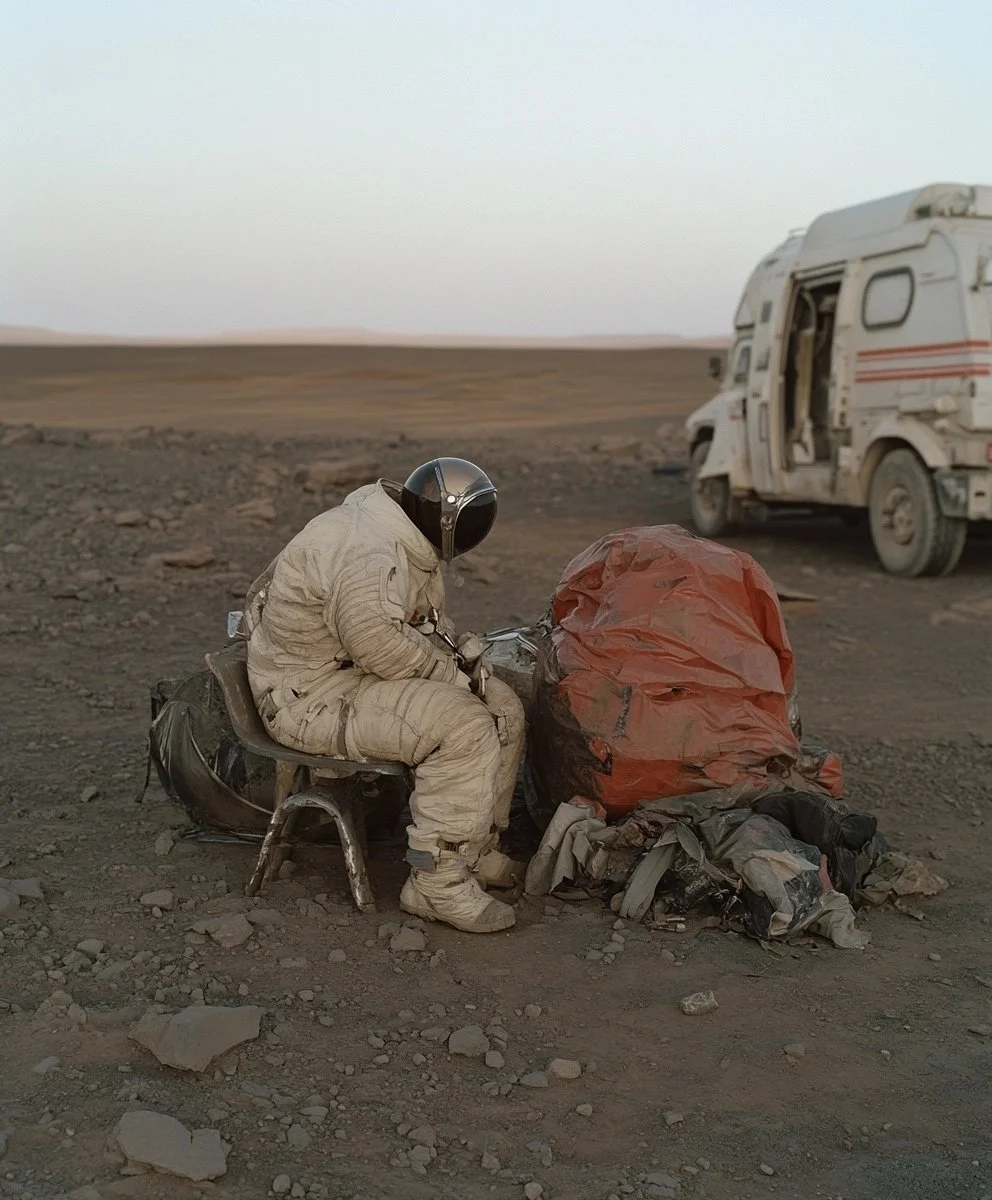
In several of the most haunting images, astronauts rest inside ruined vehicles, sleep in shallow caves, or sit motionless in torn suits stained by dust and time. Himmerman treats these scenes with the solemnity of historical portraiture. The desert becomes both a physical location and a psychological state: a place where ambition, devotion, and isolation converge into a single unresolved gesture.