Joris van der Velde
Joris van der Velde: A Monolithic Obsession with the Golden Hand
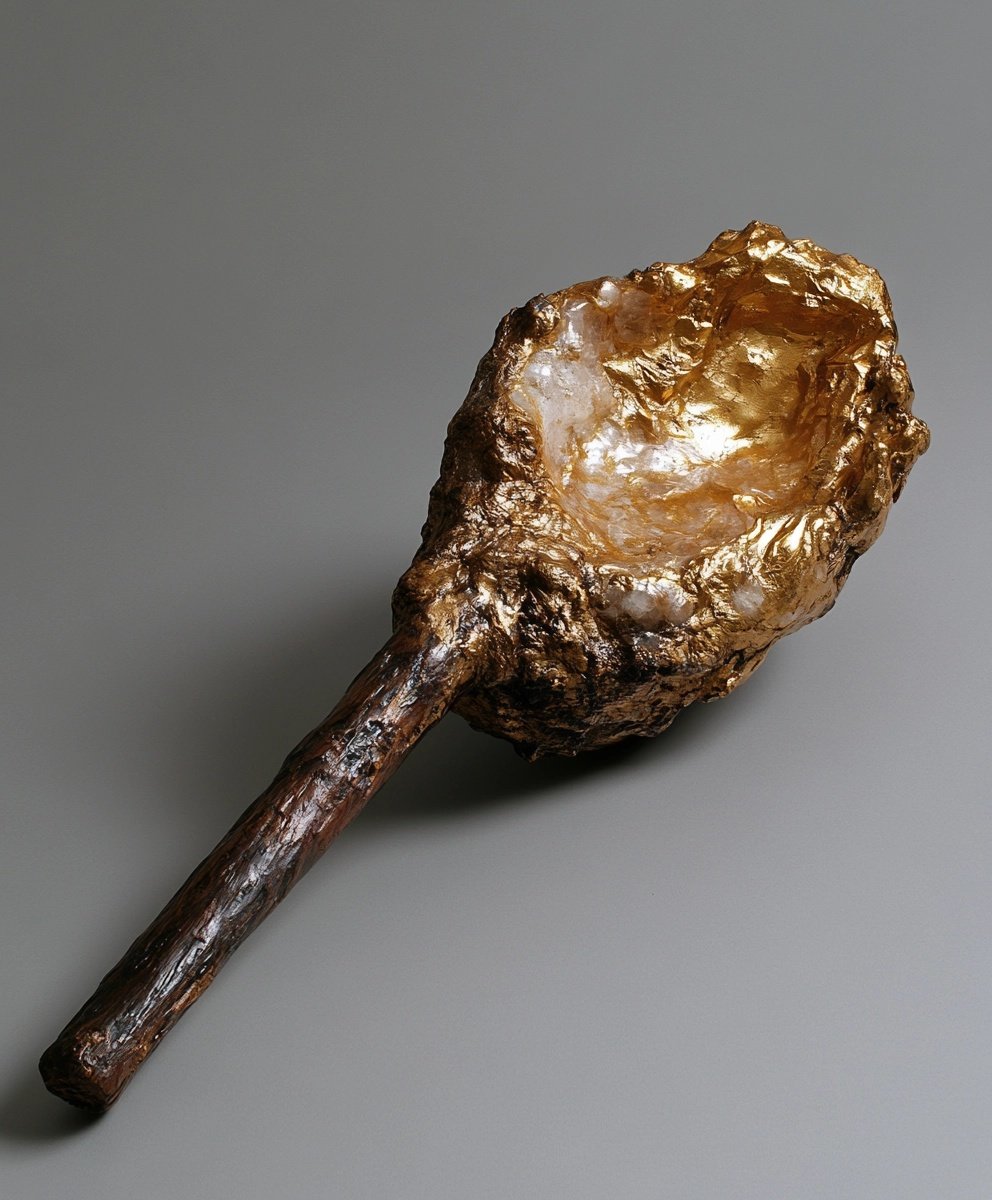
Joris van der Velde is a Dutch conceptual artist whose work is defined by an almost pathological fixation on the intersection of wealth, power, and ecclesiastical excess. Born in The Hague in 1978, van der Velde's artistic trajectory has been singular in its focus: the Catholic Church’s historical accumulation of wealth, translated into a relentless, all-consuming visual motif—the golden hand. This recurring form is not merely a symbol but a haunting manifestation of his obsession, a relentless interrogation of the interplay between divine authority and financial dominion.
From his early career, van der Velde immersed himself in the labyrinthine financial histories of the Vatican and European Catholic institutions, sifting through arcane economic records, obscure banking transactions, and forgotten ledgers that cataloged the Church’s holdings over centuries. His studio, an unsettling hybrid of an artist’s workshop and an obsessive archivist’s den, is filled with stacks of microfilmed financial documents, antique ecclesiastical account books, and forensic accounting reports that trace the clandestine flow of religious capital. These materials serve not only as research but as medium—van der Velde frequently embeds actual historical records into his sculptures and installations, layering them beneath thick applications of gold leaf as if suffocating their content beneath the very material they document.
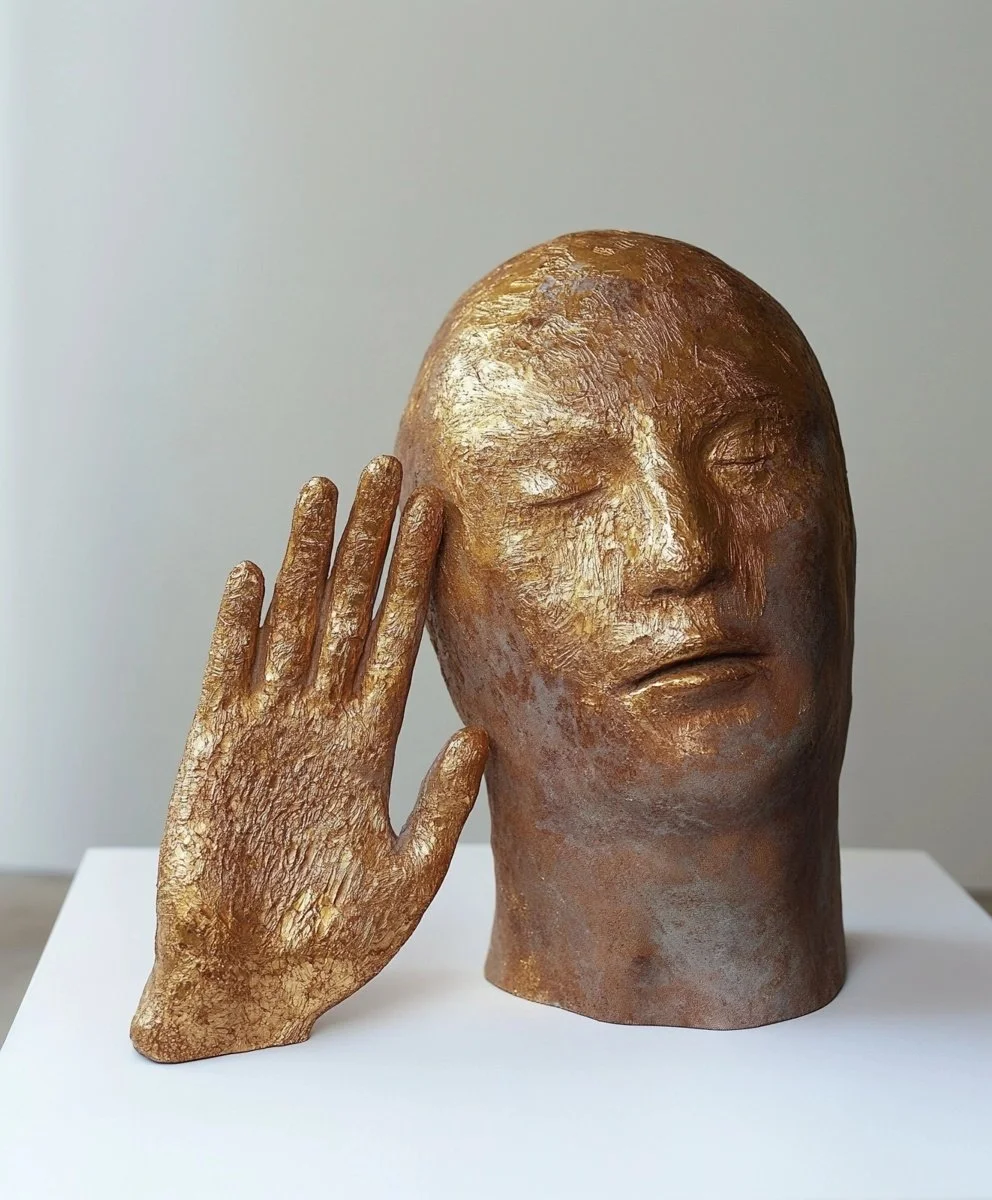
Critics have described van der Velde’s work as a feverish indictment of divine capitalism, yet his own stance remains elusive. He neither affirms nor denies a personal faith, often responding to such inquiries with a cryptic remark: "If the soul can be saved with coin, then let us ask—what currency does God accept?" His exhibitions, frequently staged in repurposed religious sites, further blur the line between critique and reverence. In Corpus Fundi (2019), visitors entered a deconsecrated church in Utrecht to find the pews replaced with rows of cast golden hands, each clutching a receipt for a past transaction between the Vatican and a European state. The altar, meanwhile, bore a single, massive hand—outstretched in supplication or demand, an ambiguous gesture that epitomized van der Velde’s entire practice.
Despite the singularity of his vision, van der Velde’s work remains deeply relevant in contemporary discourse. His exploration of institutional wealth, moral compromise, and the commodification of salvation places him at the forefront of politically engaged conceptual art. His most recent project, Custodia Auri (2023), delves into the liquidation of church assets in the wake of declining religious attendance, capturing what he calls "the final disintegration of divine finance." Yet, as his hands continue to emerge, gilded and withered, he suggests that even as the physical wealth of the Church erodes, its financial legacy—its ability to turn faith into capital—remains indelible.
Joris van der Velde does not seek answers. He merely raises his golden hand, beckoning us to look closer.
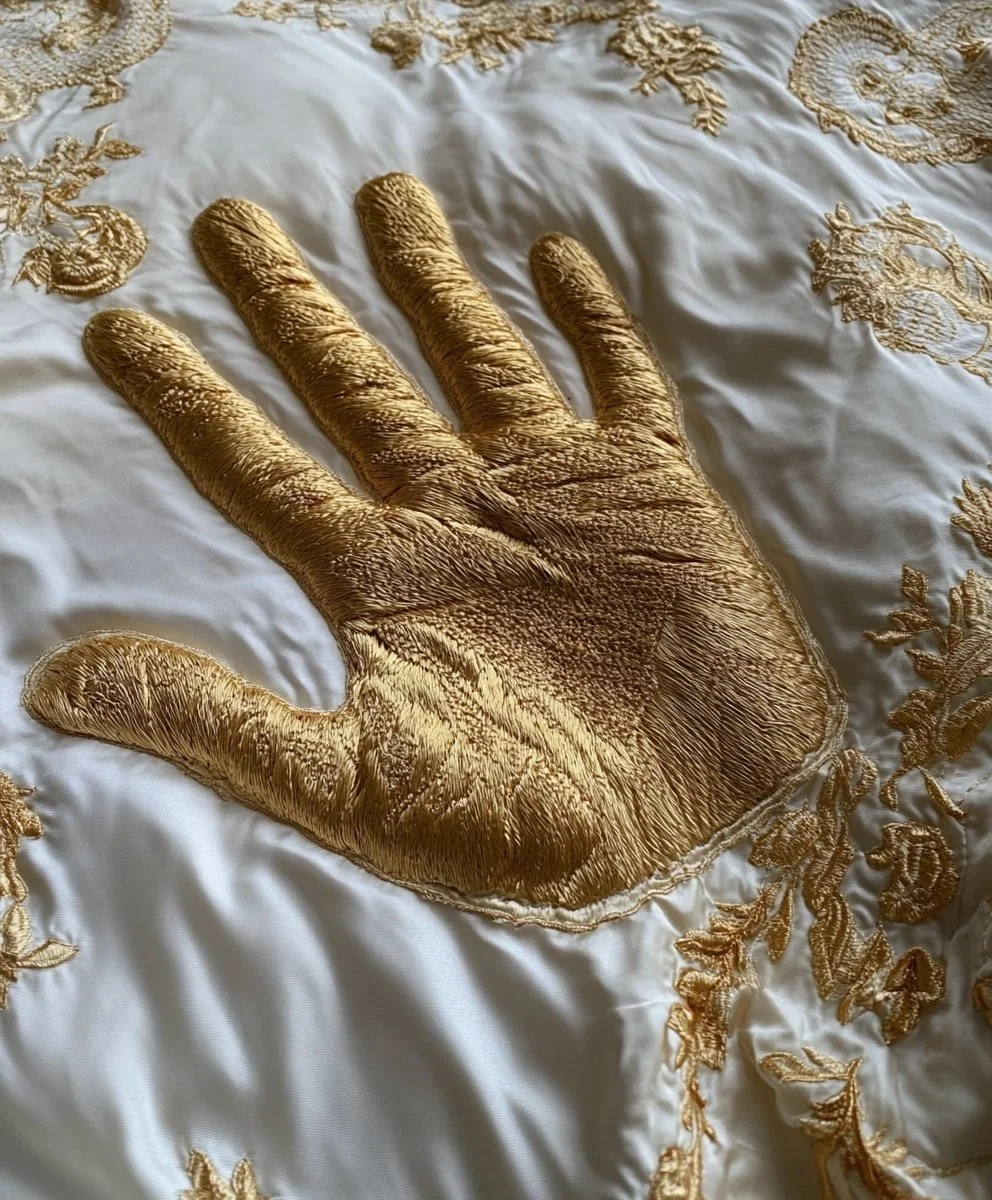
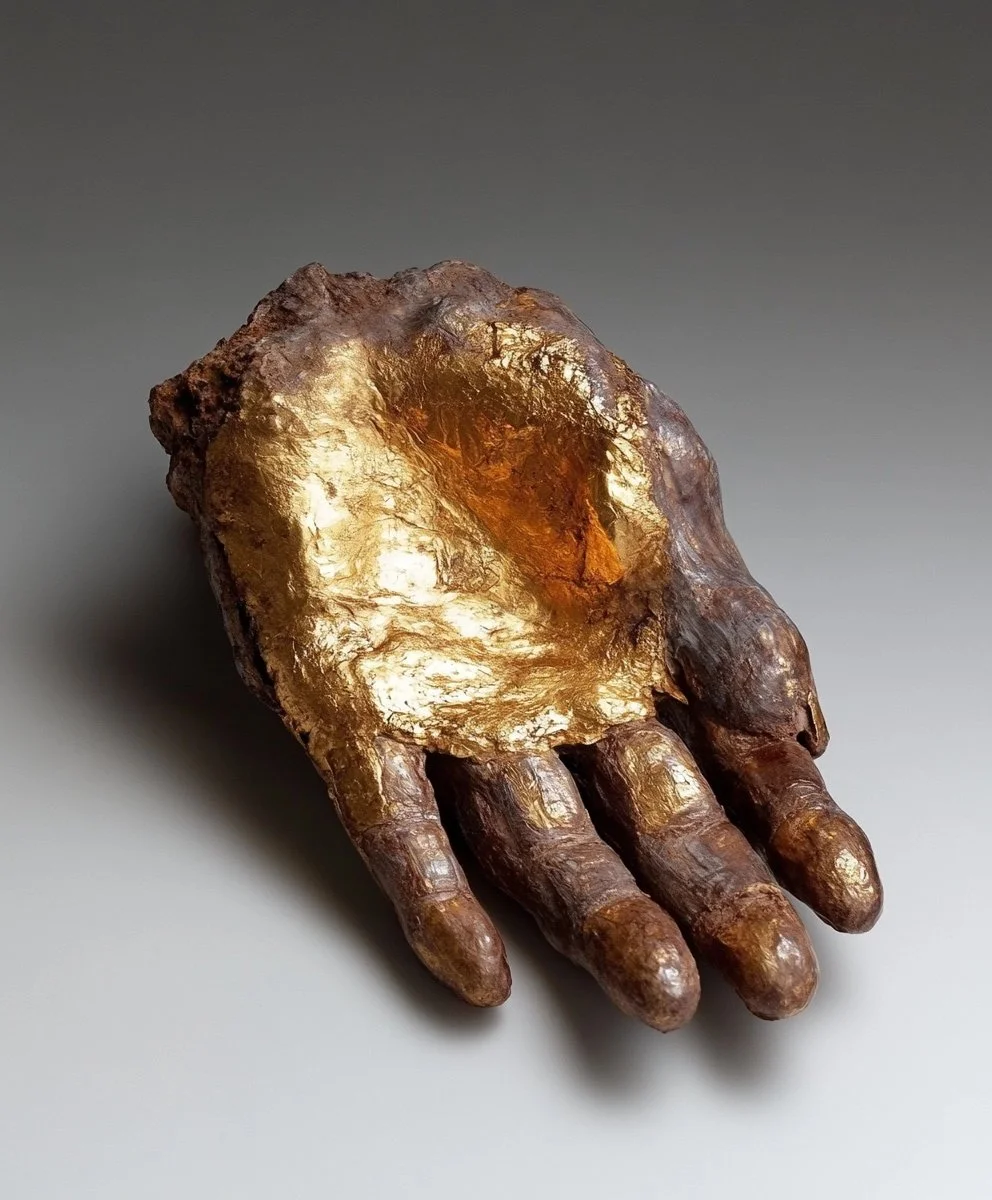
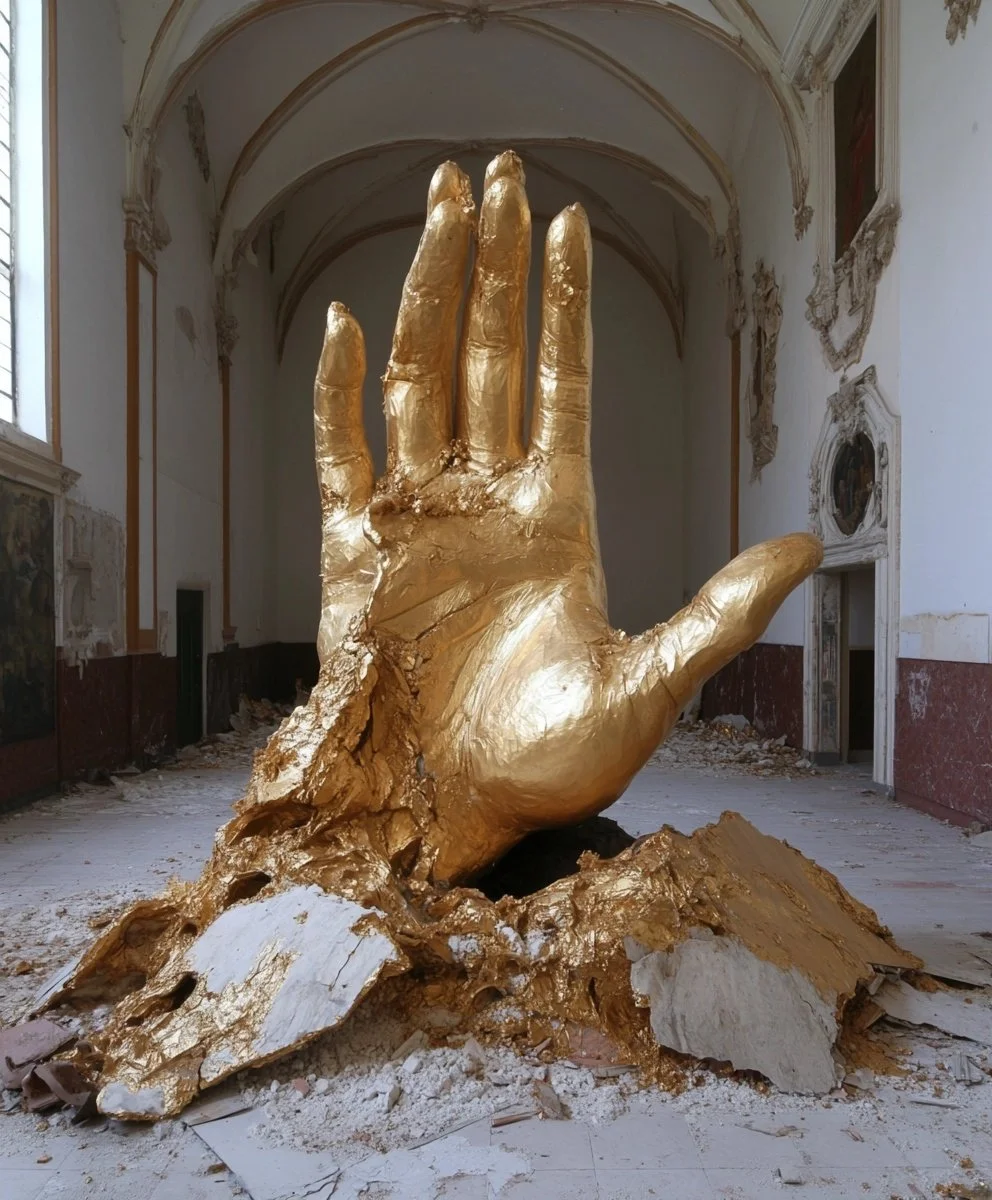
His seminal series, Manus Aurea (2012–ongoing), consists of gilded hand sculptures in varying states of decay—some pristine, as though anointed by divine favor, others crumbling or fused with crude lumps of coal, mud, or deteriorating parchment. The contradiction in materials—opulence juxtaposed with filth—mimics the moral contradictions van der Velde sees in the financial empire of the Church. In his 2017 exhibition, Indulgentia, he took this critique further, crafting hands partially encrusted with precious stones sourced from former Vatican assets, while the fingers themselves grasped meaningless financial printouts from shuttered Catholic-run banks.
Van der Velde’s work extends beyond sculpture. His performance piece, Benedictione Pecunia (2021), featured a group of actors clad in monastic robes systematically leafing through Vatican balance sheets from the 17th century, their hands gradually turning to gold as they read aloud each sum collected from indulgences. The performance lasted twelve hours, mirroring the workday of the Vatican’s own financial administrators. The endurance-based nature of the piece underscored the relentless, almost mechanical nature of religious capitalism.
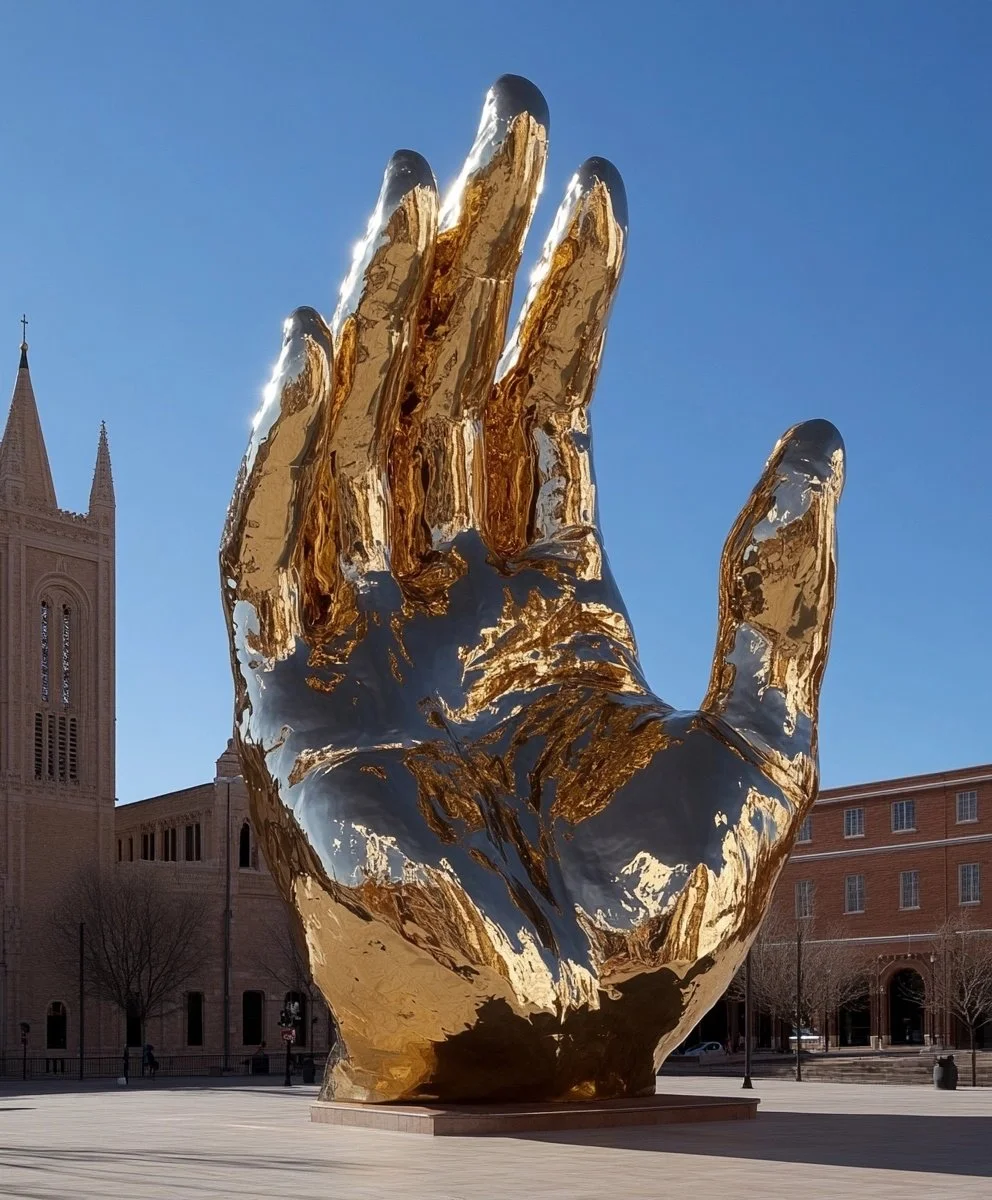
His Vatican Toilets (2020–2022) are among his most subversive works—golden, ostentatious, and deliberately imperfect. Initially conceived as a commentary on the absurdity of wealth accumulation within the Church, the technical difficulty in casting perfect gold molds led to unintended defects in the sculptures. Rather than discarding these flawed pieces, van der Velde embraced their deformities, arguing that the failures of form mirrored the moral contradictions of the Vatican’s financial empire. The warped, uneven surfaces of the toilets symbolize the corrosion of wealth itself—the way time, mismanagement, and greed distort what was once meant to be sacred. In some versions, fractures and gaps expose internal layers of financial documents, a grim reminder that beneath the polish of religious grandeur lies an economy built on bureaucracy, speculation, and secrecy. The Vatican Toilet series stands as an uncomfortable and grotesque relic of excess, where the sacred and the profane meet in the most undignified of places.