
Excavating the Civilizations
Zelda Gorf
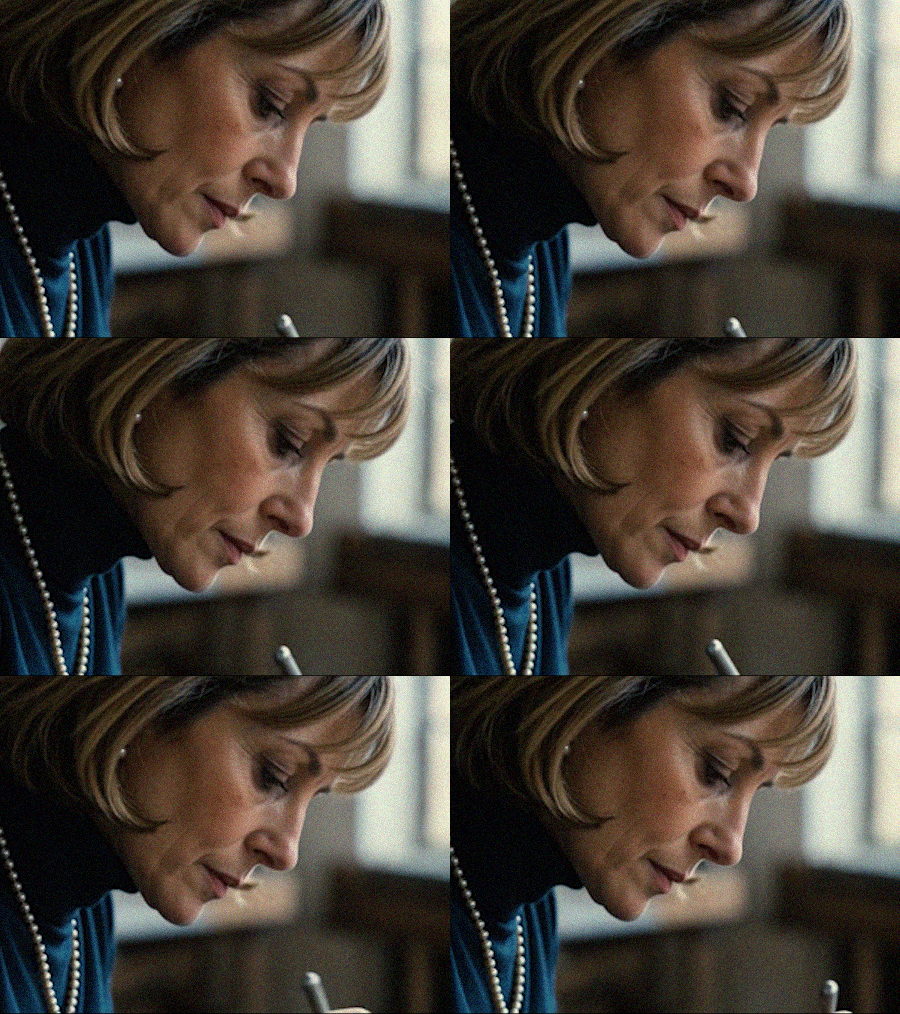
Zelda Gorf was born in Vienna in 1958 into one of Austria’s long-established industrial families, whose fortunes were built in steel, rail, and Alpine mining. Raised between the formal apartments of Vienna and an expansive family estate high in the Tyrolean Alps, Gorf developed an early fascination with geology, architecture, and the idea that landscapes could contain buried histories. Family archives suggest she spent much of her childhood collecting stones, sketching ruined cities, and constructing miniature worlds from bark, clay, and fragments of rock found on the mountain.
Although surrounded by privilege, Gorf was known for an unusually introspective temperament. Tutors described her as quiet, intensely observant, and preoccupied with civilizations that might have existed beyond the boundaries of documented history. While other children immersed themselves in fairy tales, Gorf studied archaeological atlases and natural history texts, becoming captivated by the notion that memory could be embedded in matter itself. This conviction would become the central philosophical foundation of her life’s work.
Why do you devote yourself to civilizations that never existed?
“I am not inventing places,” Gorf says. “I am giving form to memories that seem older than my own. These landscapes arrive with the certainty of something once known and long forgotten.”

“ I choose materials that already contain time - My role is simply to excavate what appears to be waiting inside them. The work feels less like sculpture than a form of listening.”
In the late 1970s, Gorf enrolled at the Academy of Fine Arts Vienna, where she studied sculpture, architectural drawing, and conservation. During these years she was influenced as much by geology and museum display as by traditional art practice. Professors noted her refusal to create autonomous objects in favor of works that appeared to be fragments of larger, vanished worlds. Her student pieces consisted of carved sections of stone and wood that suggested ruins, crater basins, and subterranean chambers.
After completing her studies, Gorf traveled extensively through Greece, Turkey, Egypt, and southern Italy. Rather than focusing on monuments themselves, she became interested in erosion, weathering, and the gradual transformation of human structures back into landscape. She filled notebooks with drawings of amphitheaters, collapsed ports, and mineral formations, developing a visual vocabulary in which archaeology and geology became indistinguishable. These journeys reinforced her belief that every civilization, real or imagined, is eventually absorbed by the earth.
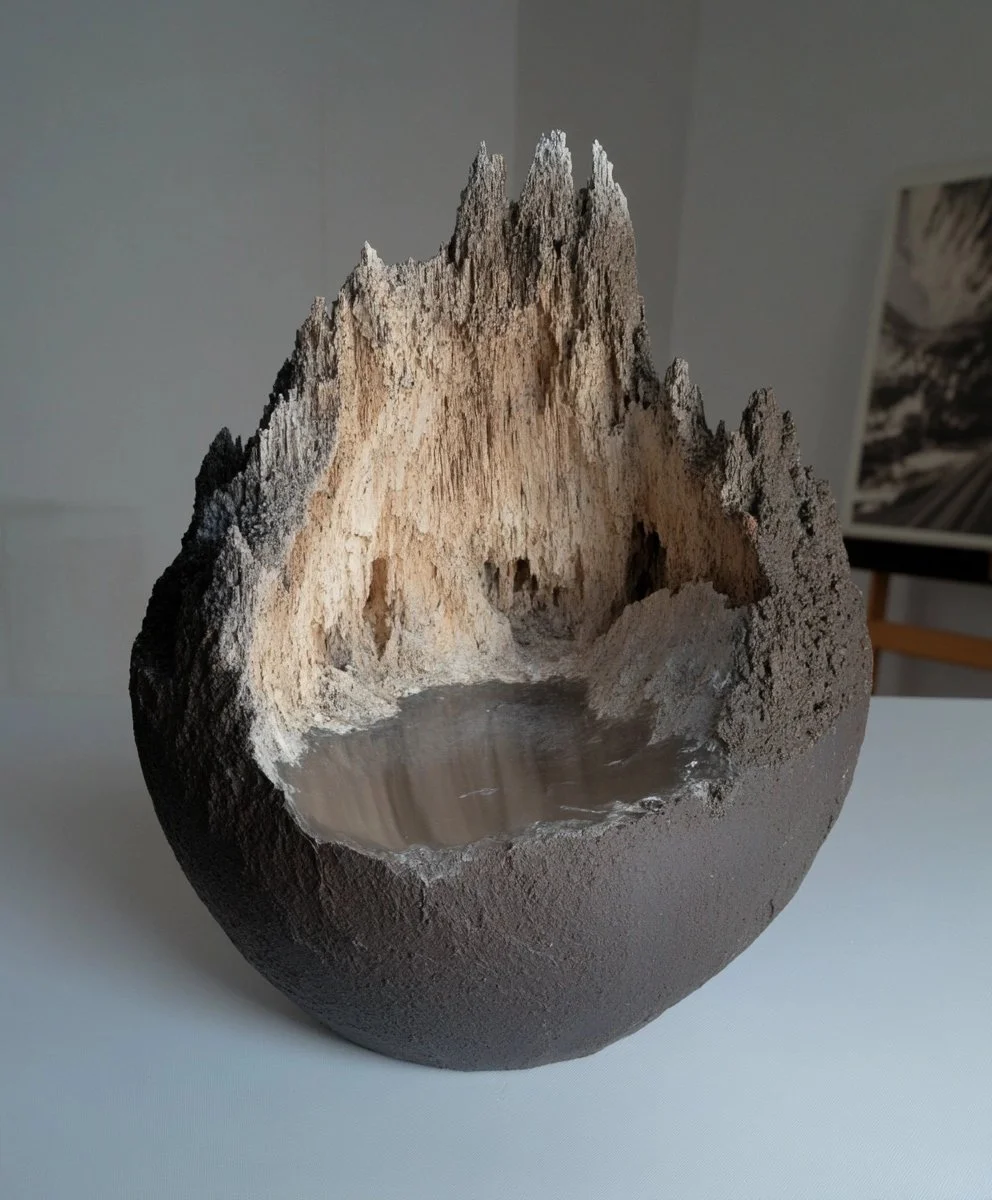
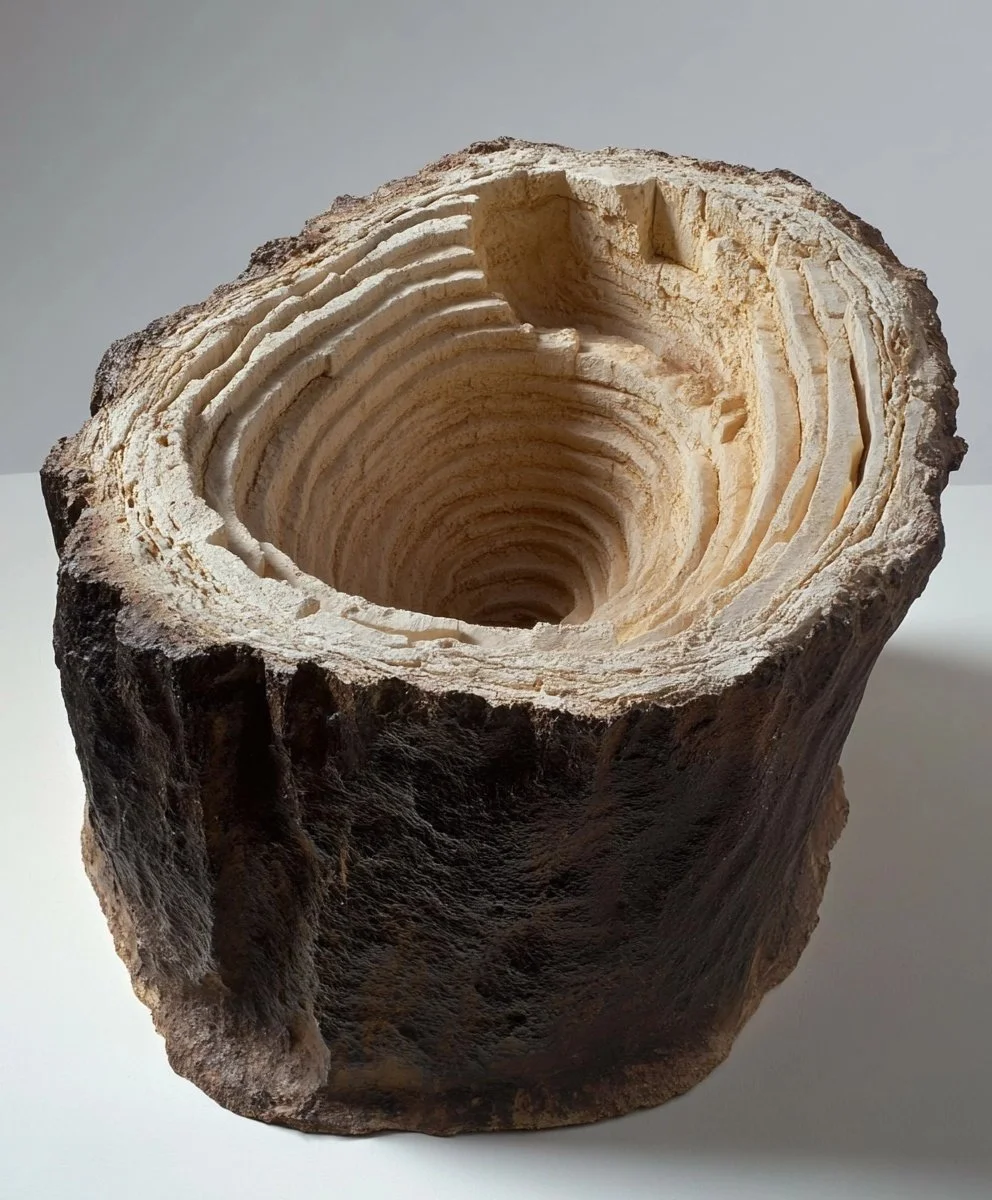
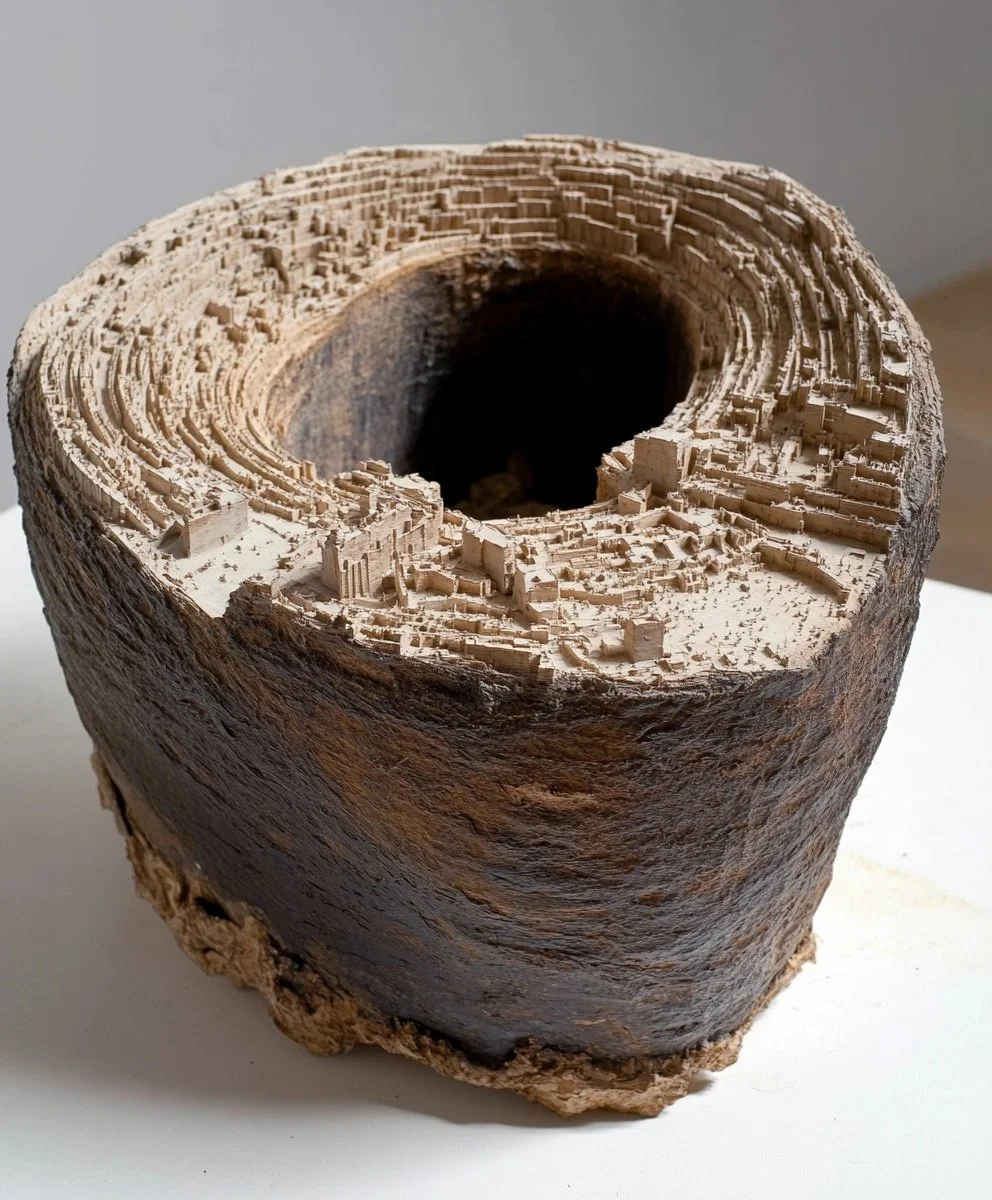
In the 1980s, Gorf withdrew almost entirely from public artistic life and returned to the family estate in the Alps. There she established a private studio overlooking a glacial valley and began the body of work for which she is now quietly revered. Using petrified wood, basalt, limestone, and mineral-rich rock, she carved miniature lakes, crescent cities, amphitheaters, and crater-like landscapes that appear to have been unearthed from another world. Each work suggests a discovered artifact rather than a constructed sculpture.
Gorf’s process is extraordinarily meticulous. She begins by selecting materials whose natural grain, fissures, and mineral deposits imply an underlying geography. Rather than imposing a design, she studies the structure of the object until a hidden landscape seems to reveal itself. Working with dental tools, chisels, and fine abrasives, she excavates cities, shorelines, and architectural forms directly into the material, allowing each piece to emerge as if it had always existed within the stone.
The Austrian Sculptor Who Carves Memory into Stone
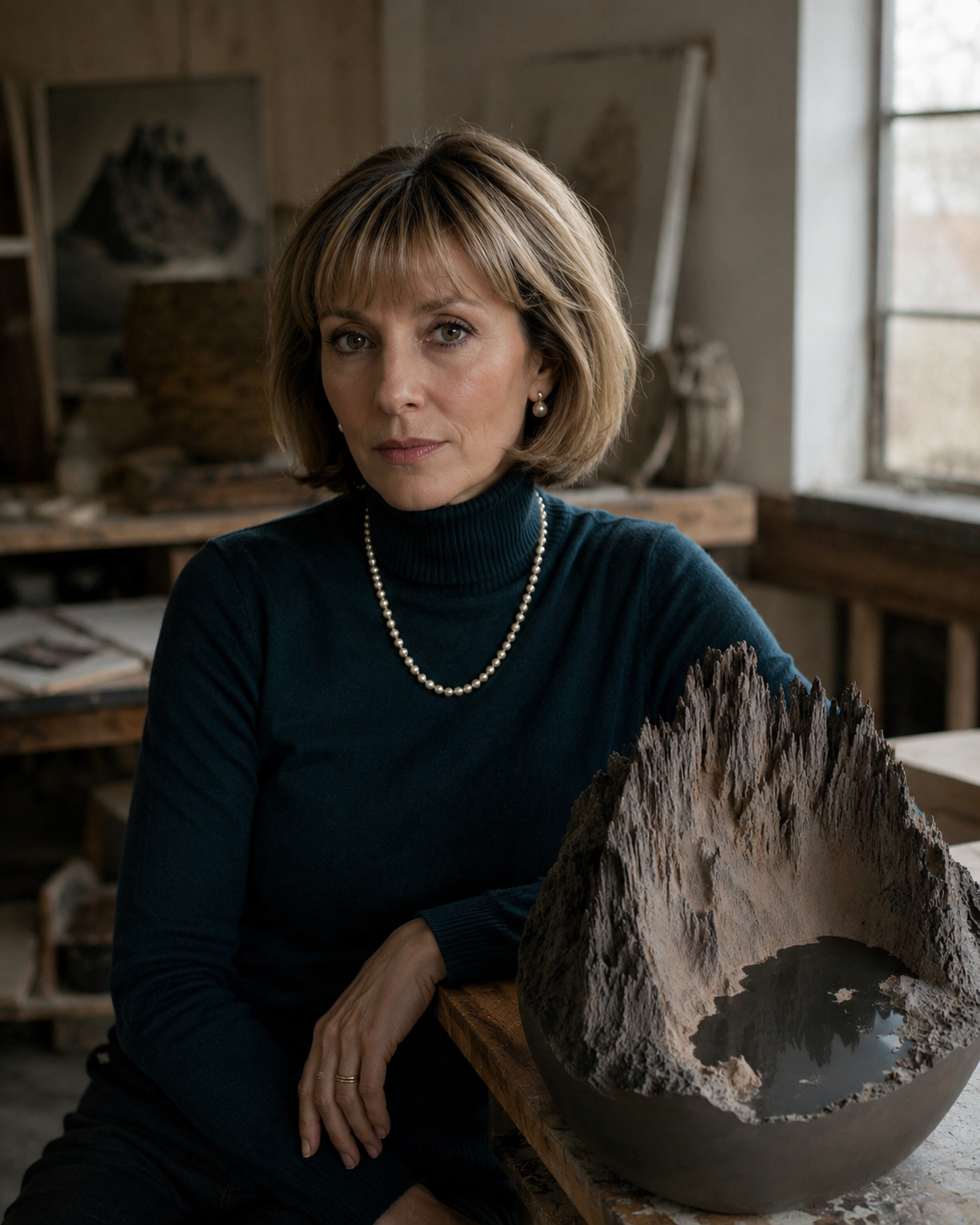
Why do you keep your work hidden from the public?
“The sculptures are not objects to be consumed,” Gorf explains. “They need to remain together, like fragments of a single buried world. To separate them would be to destroy the civilization they belong to.”
The resulting sculptures occupy an ambiguous territory between artifact and fiction. Some resemble drowned volcanic basins surrounded by jagged cliffs. Others contain densely carved urban centers spiraling toward a central void, while still others evoke ancient amphitheaters eroded by time. Though entirely invented, the works possess the authority of archaeological relics, prompting viewers to question whether they are witnessing memory, speculation, or evidence of a civilization that history failed to record.
Throughout her career, Gorf has maintained a steadfast refusal to commercialize her practice. None of her sculptures have ever been offered for sale, and she has declined invitations from galleries, museums, and collectors. The complete body of work remains housed within the family estate, catalogued and preserved under controlled conditions. Only a small number of photographs are released periodically, contributing to the aura of secrecy that surrounds her name.
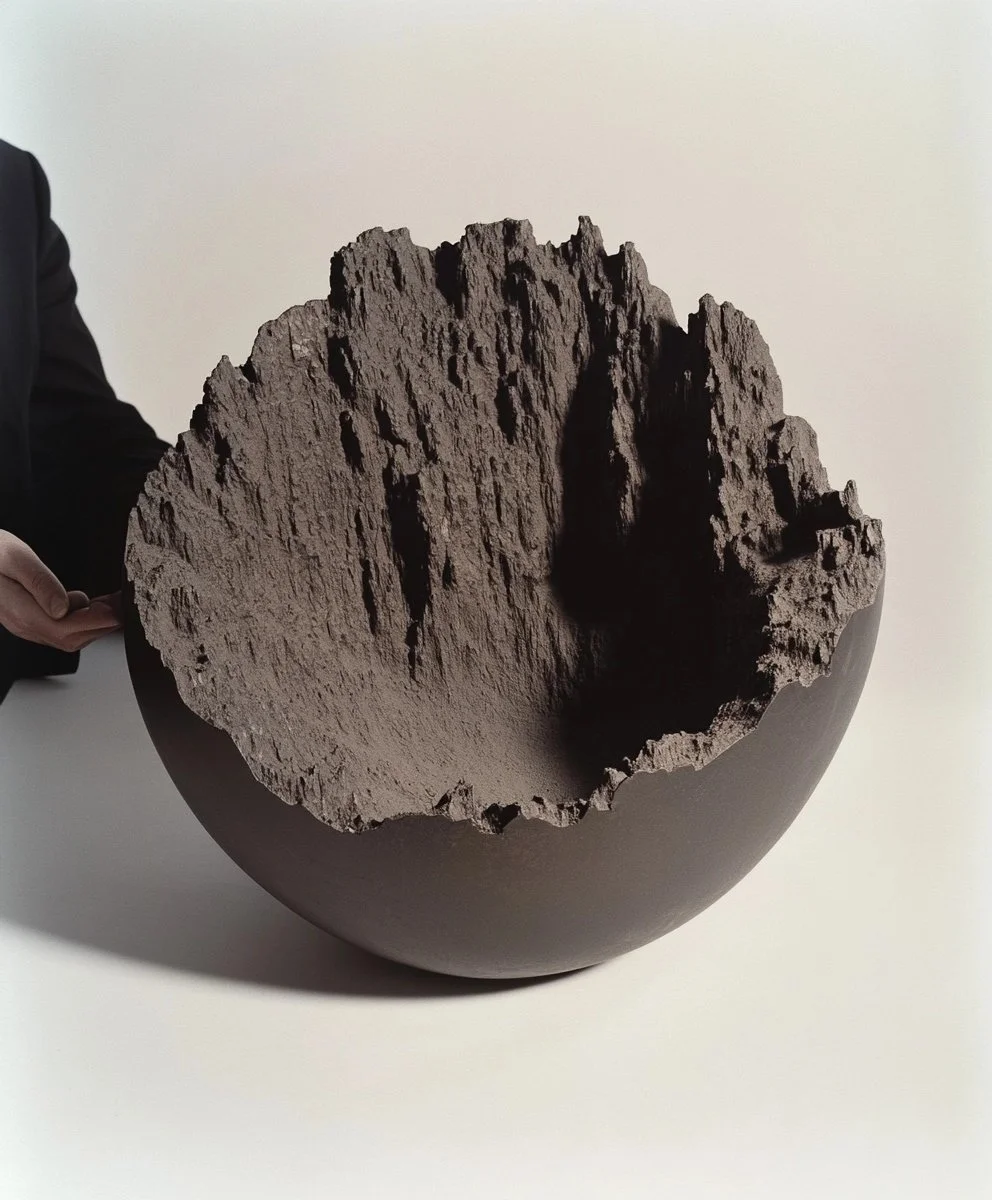
Art historians who have encountered the work describe Gorf as a singular figure operating outside the conventions of the contemporary art market. Her sculptures have been compared to the visionary architecture of Giovanni Battista Piranesi, the fictional geographies of Jorge Luis Borges, and the romantic melancholy of Central European landscape painting. Yet these references only partially explain the emotional force of her practice, which is rooted in a profound meditation on time, disappearance, and the fragility of human ambition.
Now in her late sixties, Zelda Gorf continues to work in near-total seclusion in the Austrian Alps. Assisted by a small team that handles documentation and conservation, she devotes her days to the slow excavation of new imaginary worlds. Her work remains inaccessible to the public, preserved in silence among mountains and stone. Through these secret landscapes, Gorf has created one of the most enigmatic and compelling bodies of sculpture in contemporary art—an enduring archive of civilizations that never existed, yet feel uncannily remembered.